Showing posts with label cooking. Show all posts

Friday, April 27, 2012

Best Yoghurt Ever


We've got a thing about yoghurt in this family. It's delicious, it's healthy, and it's versatile because it can be served sweet or savoury. Plus it's a useful replacement for ice cream in a household that's trying to cut down on sugar but still enjoys desserts.

Farmdoc is our yoghurt chef and he's made several batches so far. They've all been pretty good - except perhaps for the one that ended up being fed to the dog. 
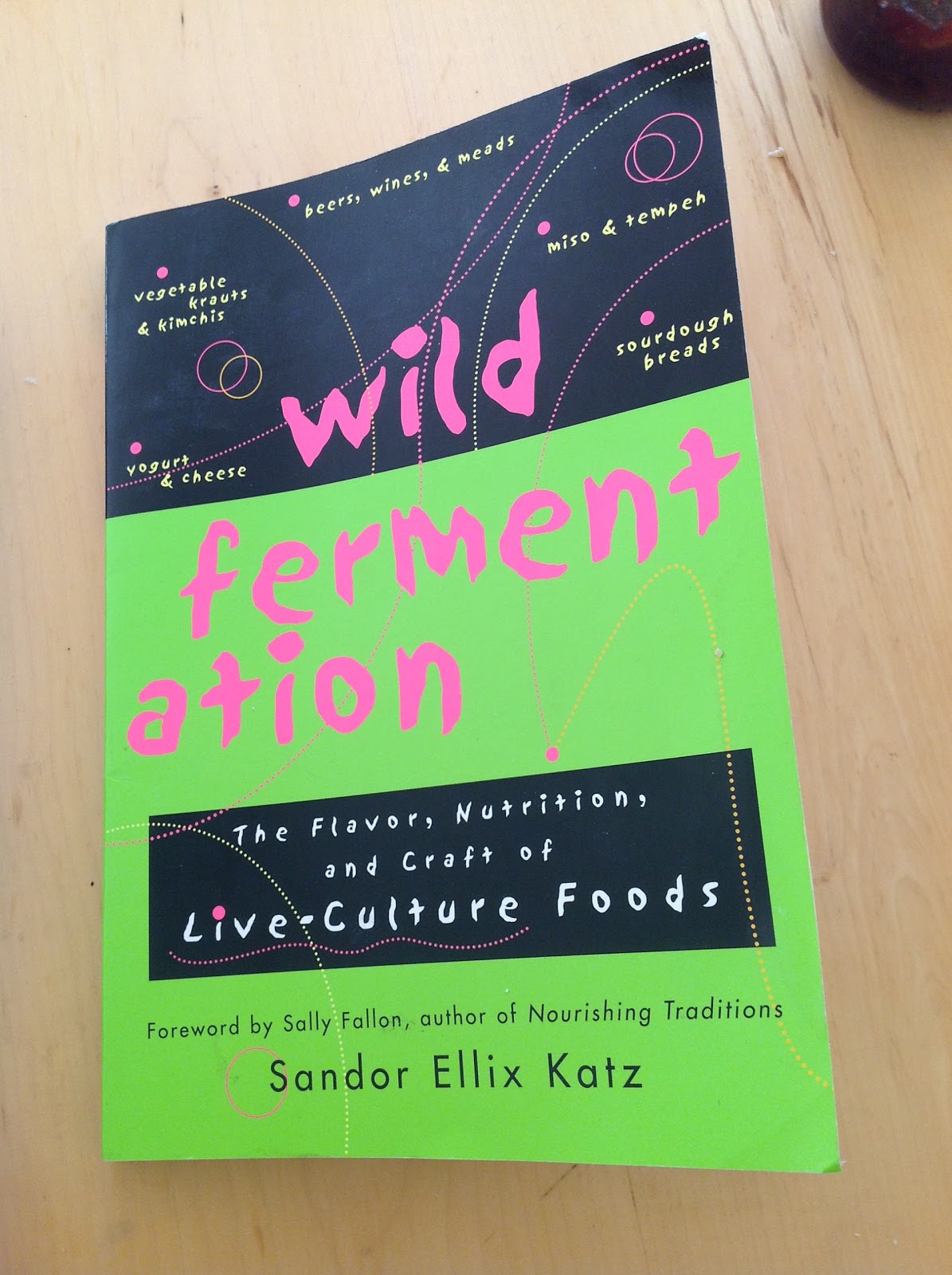

Then he looked up yoghurt making in Wild Fermentation, by Sandor Ellix Katz, who's a bit of a guru in these matters, and everything changed. The book was a gift from Daughter Number Two (Thanks, Meg).


The recipe is pretty simple and you don't need any special equipment. 

We began with some bought yoghurt that was organic and biodynamic because then we could assume it contained live cultures. This is known in yogurt making circles as the starter.

Then we:

1. preheated the jar we planned to use
2. heated one litre of milk gently until bubbles began to form


3. cooled the milk until it was hot but a (clean) finger could be kept in it without undue pain
4. mixed the starter (the bought yoghurt) thoroughly into the milk. Here Katz was particularly useful. Until now we'd thought the more starter the better but he insists on only a tablespoon per litre so the culture has room to move
5. put the lid on the jar and placed the jar in a warm place. 


We put a tea cosy on ours and set it on the rack on top of the wood stove, which we kept alight all day.

And that's it.

After 8 to 12 hours it should have a tangy flavour and some thickness. If it hasn't thickened, add more starter and keep it warm for another 4 to 8 hours.

Store in the fridge and remember to save some for a starter for your next batch.


Are you a yoghurt eater? You can adjust the tanginess by leaving it longer for more of that characteristically yoghurty flavour if you want. 

I LOVE yoghurt, the creamier the better and this one is super creamy. And it's good for me!! What's not to like about that?! Thanks, Farmdoc. Thanks Sandor.

Friday, October 1, 2010

What's Cooking?

The last weekend Farmdoc and I were in Victoria we taught a cooking class at the Daylesford Neighbourhood Centre.


I used to be a keen cook. I did a course at the Cordon Bleu School of Cooking in London back in the day, and I cooked for our household of six for years, sometimes serving up five different meals to cater for vegetarians, dieters and those who wouldn't eat anything that was coloured orange.

Once the kids left home writing became my priority. I began to look on cooking mostly as something that took me away from what was important.


But our community-minded daughter Meg believes that everyone has something they can teach others, and she is very persuasive. There are dishes that have remained part of my regular repertoire and it was those that Meg thought I could teach. Teamed with Farmdoc's great bread-baking skills we put together a class that went into the program as Basic Jewish Cooking. We taught challah (the plaited egg loaf eaten on the sabbath), chicken soup, matzah balls and honey cake.


It was a lot of work to prepare. Farmdoc broke every recipe down into individual actions and compiled lists of ingredients and equipment we'd need. We weren't sure dishes would turn out well because the centre's oven cooks unevenly. But the food was delicious and the class was a lot of fun. I think our students enjoyed it; we definitely did. We were lucky to be assisted by Meg and our granddaughter, Indigo.

I'm grateful to Meg for giving us the opportunity to share some of the knowledge and skills we have and encouraging us to teach the session. There's something elemental about preparing and breaking bread together and it was nice for Farmdoc and me to combine our artistic and scientific approaches. We're already planning what we'll teach next year.

Sunday, January 17, 2010

Sour Cherry Jam

I have just made my best batch of sour cherry jam ever! Some years I have overcooked it so it tasted like toffee and sat in lumps on the toast; last year I undercooked it so it ran down your fingers when you tried to eat it.


A couple of days ago we picked several ice cream containers full of cherries. That's the best part of the process: working in the shade of gnarled old trees, admiring the contrast of red against brown and green.


Then I waited until I had the time to complete the project. Yesterday afternoon I decided that the time and the cherries were both ripe. I have a stiff neck at the moment, perhaps because I am reading Hilary Mantel's Booker Prize winning book, Wolf Hall, and though I'm enjoying it a lot, it is a very heavy book. To avoid any neck strain I sat myself up on a high stool and decided I would only make a few jars. Maybe because I never seem to get it right or maybe because it's not the sweetest jam I make, I'm really my best customer for it anyway.


First I had to pit the fruit. I couldn't get any volunteers to help with the work so I plugged my iPod into my ears and listened to podcasts while I got the wood stove nice and hot. I use an unbent paper clip because I find it much more effective than my store-bought cherry pipper.


Because whole cherries tend to fall off the toast I cut all the fruit into small pieces before putting them into a pot to soften on a slow heat. At this time I added the juice and grated rind of one and a half lemons. Why that number? Because that's what I had and because last year I had a lot of trouble getting the jam to set, and I think it's because one lemon isn't quite enough. I was also very patient softening the cherries because although I hate to see them lose their shape, they do make better jam if they are really soft. This took about half an hour.

Then I measured the quantity I had in the pot, including the juice, and asked Farmdoc to work out how much three-quarters of that amount would be (because I am innumerate), and that's how much sugar I added. I stirred the cherries until the sugar dissolved and then cooked it over high heat. While this was happening I put the small white saucer that I call my jam plate into the freezer. This was pretty hot work because I managed to get the stove's temperature up quite high and I had to stand over it and stir the fruit pretty constantly.

When the bubbles subsided somewhat and the jam began to thicken a little, I took it off the stove and put a spoonful of jam on the cold plate and put it back in the freezer. After a couple of minutes I pushed the blob with my finger and when it didn't wrinkle, I returned the pot to the stove to cook some more. I actually had to do this a couple of times, each time removing the pot while I waited to see if the jam was cooked. I think this is where I usually go wrong. I was nervous about overcooking it and caramelising the sugar, but I was also anxious to make sure it was jam and not syrup. Once I felt it was done I poured it into my sterilised jars and covered them tightly.

This morning I couldn't wait to try some on my breakfast Weetbix. It was perfect! Yay!


Sunday, September 20, 2009

Sunday, Early Spring

I love days like today. The sort of day where we light the kitchen stove to make the breakfast porridge and keep it lit all day. As much for warmth and keeping the house cosy as for cooking.

I made a pot of soup and left that simmering for a few hours. I also made a lamb stew for later in the week when we have guests for dinner. And then there are the herbs - sage and rosemary - that are drying on the rack above the stove.

Farmdoc was anxious to try out a new recipe for fruit loaf. We were expecting friends for afternoon tea so it seemed like the perfect opportunity.


While the dough proved and the soup and stew simmered, we fed out hay to the stock. As soon as they heard the engine of the four-wheel drive bike the goats came running, though the sheep thought the pickings were better elsewhere.


This time of the year the hay in the hay shed is at about the halfway mark, but we have only another two or three weeks of feeding out to go before the spring growth in the paddock takes over, and we can take it a bit easier.


I don't mind feeding out, unless it's pouring. The farm is beautiful and it's nice to be out in the fresh air. This year is a good one for wattles.


Farmdoc says I look like a dinkum Aussie in my wet weather gear.


For me the best part is hanging it up


and coming inside for afternoon tea of freshly baked fruit bun.


Friday, May 8, 2009

Stuffing the Chook


One of my favourite things to do is write and cook at the same time. Like companion plants, for me these are companion activities. I find that where doing each one separately can leave me feeling frustrated in some way or exhausted, doing them together raises both my energy and creativity levels and helps me see connections I otherwise may have missed.

Today I am preparing shabbat dinner for my daughter E, my father, my aunt, my older brother and his wife. At the same time I am revising an adult novel that has sat in first draft form untouched on my hard drive for nearly a year while I concentrated on my memoir.

I'm finding the time away from the novel has given me the distance I required, so I can see a little more clearly what it needs and I'm quite excited by my new approach. I only hope I can pull it off.

I began my cooking with the challah dough.

First I mixed three cups of bread flour with a teaspoon of salt, a scoop of sugar, and a tablespoon of yeast. Then I added two eggs, a slurp of oil and about two-thirds of a cup of water.

I kneaded this - always the best part - and let it stand till it doubled in size. Then I weighed the dough and divided it into three equal portions. I rolled these into ropes, which I then plaited and laid on a baking sheet to rest.


When the loaf had doubled in size it was time to brush it with beaten egg and sprinkle it with sesame seeds


and bung it in the oven for about 40 minutes. At this stage the aroma made it difficult to concentrate on my work.


As a nineteen-year-old bride, one of the first things I learned to cook was traditional stuffing. My mother-in-law, who was an excellent cook, taught me, and I used to turn up to my university lectures with hands smelling of onion and garlic. I've been making it the same way ever since. Today I'm experimenting with a new method.

Before I began I squeezed my hands into rubber gloves so my skin wouldn't stink for the rest of the day- especially as I typed! I chopped half an onion, a stick of celery and a small garlic clove and softened them in a little margarine.

Then I whirled some stale bread in the food processor and added to this the cooked onion mixture, together with salt and pepper, parsley, sage and rosemary to taste, an egg and a little of my chicken soup to moisten. Then I squished it all together with my hands and stuffed it into the cavity of the waiting chook.

Along with chicken soup, challah, roast vegies and salad we should have a delicious meal. The pleasures of the company are of course assured.

Shabbat shalom to all.

Friday, April 10, 2009

Gefilte fishing

I’ve never developed a taste for gefilte fish. It’s always looked so unappetising to me: anaemic slabs of cold reconstituted fish topped with skull caps of sliced cooked carrot, swimming in a sea of clear jelly. Eccchhh.

I only remember my mother making this delicacy once and I didn’t see her do it. But this year’s was our first Seder since my mother died so maybe I was trying to capture my inner matriarch.

Fortunately I had as my guide my friend Barry who is a professional chef.

We began at the Prahran market, where we bought 2 kilograms of mixed white fish, skinned and boned. (Some people add the skin and bones to the sauce, but we didn’t.)


For the sauce, Barry sliced 3 onions and 2 carrots into about 4 cups of water seasoned with 3 tablespoons of sugar and ½ teaspoon of white pepper. He brought that to the boil and then let it simmer.

Meanwhile, I minced the fish and added it to 3 raw eggs, 3 minced hard-boiled eggs, 3 white onions, salt, sugar and pepper. Lastly I poured in about ½ a cup of fine matzah meal. I sloshed all this around with my hands, adding more matzah meal until the mixture held together.


Barry said we had to taste it. I didn’t want to – it looked yucky – but it was actually pretty tasty. I didn’t want it too sweet so we added a little more salt and pepper.

We rolled the mixture into balls and lowered these gently into the sauce. But although we poured in more water we still thought there wasn’t enough to cover all those fish balls, so we hurriedly whipped up another saucepan of sauce.


These needed to simmer for one and a half to two hours so we walked down to The Tyranny of Distance for a cup of coffee while we waited.

When we returned we scooped the balls from the saucepans and arranged the cooked carrot slices onto their dear little heads. Then we strained the sauce.


I felt like a proper balabosta at the Seder when I announced that I had made the gefilte fish. And actually they were delicious, especially when served with horseradish. But I personally couldn’t come at the sauce. Too much like eating jellyfish. Eccchhh.

Tuesday, April 7, 2009

Great balls of matzah!

The story goes that when Marilyn Monroe was married to Arthur Miller she said to him, ‘Matzah balls? Isn’t there any other part of the matzah you can eat?’

I don't know if the story's true; I only know that when Passover approaches it's time for me to get out the matzah meal and get cracking. This year for me, yesterday was the day.

There's no real recipe. Or rather there are endless variations. For one packet of matzah meal I used four eggs, a tablespoon or so of margarine, salt and pepper, and enough vegetable stock to make the mixture not too firm and not too sloshy. (I use vegetable stock, not chicken, so my vegetarian daughters can eat them too.)

I rolled the mixture into balls and left them to rest for about half an hour before dropping them carefully into boiling vegetable stock for around 40 minutes.
At this point in the process I always hear my mother's voice in my head.
‘Make sure the water’s properly boiling,' I hear her say. And, 'When they’re cooked, take them out one at a time. Don’t tip them into a colander, or you’ll end up with a heap of sludge.’

I did that once. Mum and I laughed about it together. I had to throw the mess out and start again. These days I'm patient.

Anyway, Marilyn, I don't know what you were complaining about. Is there any other part of the matzah worth eating?